Large Area Hearing Loop Systems
Large area hearing loops deliver clear, direct sound straight to hearing aids and cochlear implants, giving patrons with hearing loss full access to speech, music, and announcements in auditoriums, sanctuaries, courtrooms, and public venues across Texas.
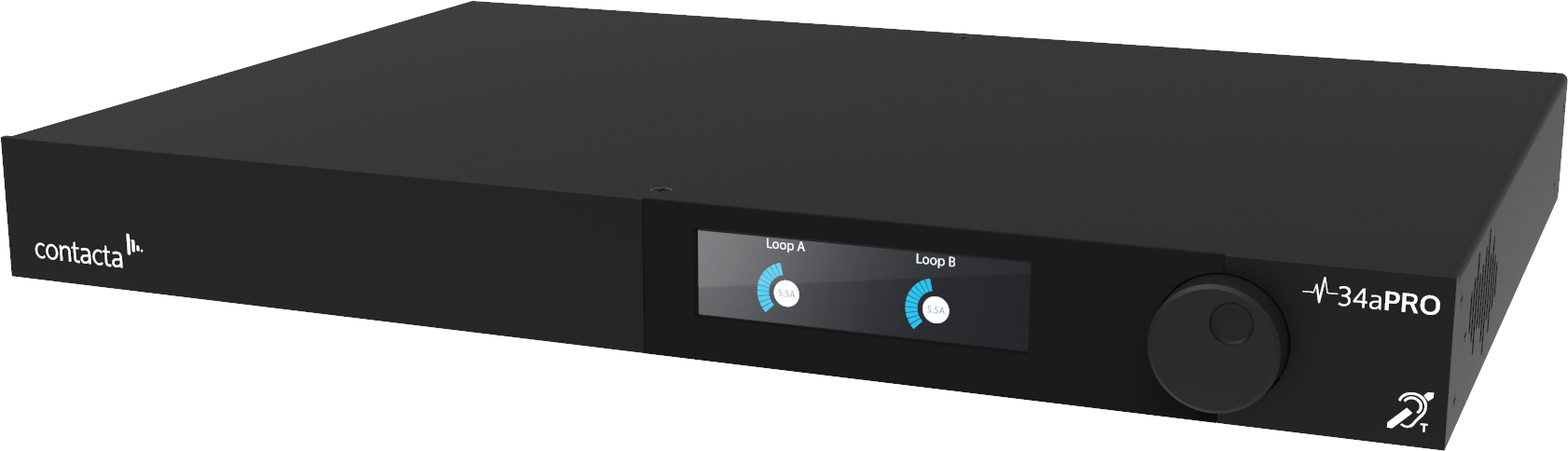
What are Large Area Hearing Loops?
large area hearing loops, also known as an induction loop or audio induction loop (AIL), is a wire installed around the perimeter of a room or beneath its flooring. Connected to an amplifier tied into a venue’s sound system, the loop generates a magnetic field that carries speech and audio directly to any telecoil-equipped hearing aid or cochlear implant in the space.
Unlike infrared or FM assistive listening systems, a hearing loop requires no headset, receiver, or checkout process. Listeners simply switch their own hearing device to its telecoil setting and hear the sound streamed straight into their ears — private, immediate, and free of background noise.
Why Large Area Hearing Loops?
- Works directly with a listener’s own hearing aid or cochlear implant — no borrowed equipment
- No headsets to distribute, sanitize, collect, or replace
- Meets ADA and IEC 60118-4 requirements for assistive listening
- Delivers clear audio with no lag, static, or dropout
- Scales from small counters to large auditoriums and stadiums
How It Works
A copper wire loop is run around the room’s perimeter, under carpet, or in a segmented pattern for larger spaces. An amplifier drives an electrical current through the loop in step with the venue’s audio feed, creating a magnetic field that fills the looped area.
The result: clear, direct sound without background noise or reverberation.
Where Large Area Hearing Loops Excel
Houses of Worship
Sanctuaries and chapels benefit from loops that carry sermons, scripture readings, and music clearly to every pew.
Theaters & Auditoriums
Performing arts centers and lecture halls use loops so patrons never miss dialogue, narration, or Q&A sessions.
Courtrooms & Government Buildings
Loops help ensure testimony, proceedings, and public meetings remain accessible and legally compliant.
Transit & Ticketing Counters
Small counter loops let travelers and customers hear staff clearly over glass partitions and ambient noise.
Why Venues Choose Large Area Hearing Loops
Hearing loops create a better experience for patrons with hearing loss while requiring far less staff involvement than headset-based systems. There’s no equipment to check out, no batteries to track down mid-event, and no return counter to staff after the show. For venues, that means lower ongoing labor costs and one less point of failure during a live event.
For patrons, the difference is just as significant. Many people with hearing loss are reluctant to draw attention to their hearing aids or ask for a headset. A hearing loop removes that friction entirely — the moment they switch their own device to telecoil mode, they’re connected. That discretion, combined with genuinely clear sound, is why hearing loops have become the preferred assistive listening solution in the UK, across much of Europe, and increasingly in the United States.
Planning a Large Area Hearing Loop Installation
Every venue is unique, and a successful installation begins with a detailed assessment of the space. Our team measures room dimensions, evaluates existing metal structures (rebar, ductwork, structural steel) that can affect magnetic field strength, and reviews the venue’s audio source to determine the best point of connection. For large or irregularly shaped rooms, we design multi-loop or phased-array layouts to prevent signal spillover into adjacent rooms and maintain even coverage throughout the seating area.
After installation, we provide testing, calibration, and documentation to ensure the system meets IEC standards and performs reliably for years to come. Ongoing support is available whenever you need adjustments, upgrades, or additional areas.
Telecoil Compatibility
Most modern hearing aids and cochlear implants include a telecoil (T‑coil). This tiny component allows the listener to receive audio directly from a loop system.
Telecoils are widely supported across manufacturers, making hearing loops one of the most universal assistive listening solutions available today.
Ready to explore large area hearing loops for your venue?
We provide free site assessments across Texas.
Learn more on our Assistive Listening Systems Comparison page.
For ADA accessibility guidelines, visit ADA.gov .